
Introduction
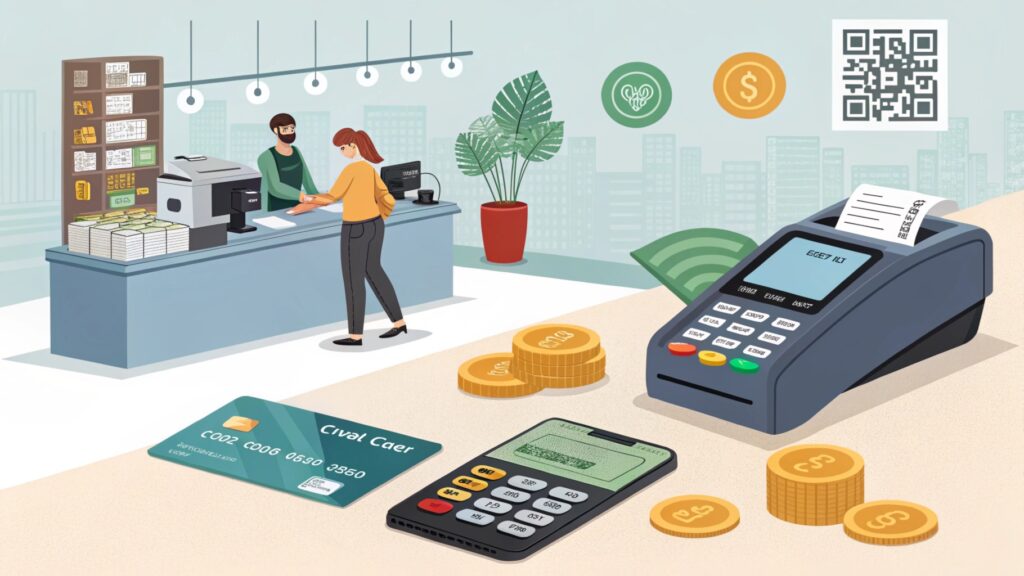
Payments are the cornerstone of economic activity, enabling the exchange of goods, services, and value across individuals, businesses, and nations. From the early days of bartering to the rise of digital wallets and real-time payment systems, the evolution of payment methods reflects humanity’s progress in technology and trade. While domestic payments cater to transactions within a country’s borders, international payments facilitate cross-border exchanges, connecting economies worldwide. Understanding what payments are, their historical development, and the distinctions between domestic and international payments is crucial in appreciating their role in today’s interconnected financial landscape.
Brief History of Payment Evolution
The concept of payments has evolved alongside human civilization, adapting to societal, technological, and economic changes. From primitive barter systems to digital currencies, the history of payments reflects the continuous quest for more efficient and secure methods of exchanging value. Here’s a detailed look at the major milestones in the evolution of payments:
- Barter System: (Prehistoric Era)
- The earliest form of payment that involved the direct exchange of goods and services without a standardized medium of exchange.Relied on mutual need; a farmer might exchange grain for a blacksmith’s tools.
- Limitations: Inefficiency in matching needs, lack of divisibility, and difficulties in storing wealth.
- Commodity Money: (~3000 BCE)
- Societies began using valuable commodities such as salt, cattle, or shells as a medium of exchange.Advantages: Addressed barter’s inefficiencies by providing a standard medium for trade.
- Limitations: Bulky, difficult to transport in large quantities, and vulnerable to theft.
- Coinage: (Around 600 BCE)
- Coins were standardized in weight and value, making transactions simplerGovernments could issue and control currency, promoting economic stability.
- Impact: Coinage established the foundation for currency systems and facilitated long-distance trade.
- Paper Money: (7th Century)
- Paper notes represented a promise to pay the bearer in precious metals or commodities.More convenient than coins for large transactions.Advantages: Lightweight, easily transportable, and scalable for growing economies.
- Challenges: Risk of counterfeiting and reliance on trust in the issuing authority.
- Banking and Cheques: (Medieval Period)
- Banking Evolution
- Bank offered safekeeping, loans, and money exchange services.Banks introduced letters of credit and promissory notes to facilitate trade.
- These are written orders directing banks to pay a specified amount.Provided a secure alternative to carrying cash.
- Significance: Banking institutions became central to financial systems, and cheques allowed greater flexibility in payments.
- Banking Evolution
- Digital Revolution: (20th Century)
- Electronic Payments:
- Innovations like credit cards and automated teller machines (ATMs).Payment networks such as SWIFT enabled international transactions.
- Banks began offering online payment systems, allowing individuals to transfer money electronically.
- Advantages: Speed, convenience, and reduced reliance on physical cash.
- Electronic Payments:
- Mobile Payments and E-Wallets: (21st Century)
- Mobile Payment Systems
- Mobile wallets integrated directly with smartphones, making payments contactless and instantaneous. Example: PayPal, Venmo, and Apple Pay
- Impact: Financial Inclusion
- Kenya –> M-Pesa
- India -> UPI
- Mobile Payment Systems
- Blockchain and Cryptocurrency: (21st Century)
- Blockchain Technology: Introduced in 2009 with the launch of Bitcoin, blockchain enabled decentralized, secure digital payments.Cryptocurrencies: Serve as both a payment medium and an investment asset. Examples: Bitcoin, Ethereum, and stablecoins like USDC
- Potential: Cryptocurrency promises faster, cheaper, and borderless payments but faces regulatory and scalability challenges.
- Future Trends
- Central Bank Digital Currencies (CBDCs): Governments worldwide are exploring digital versions of their currencies to combine the benefits of cryptocurrencies with regulatory oversight. AI and Payment Automation: Artificial intelligence is driving personalized payment solutions and fraud detection.
- Biometric Payments: Payments through facial recognition, fingerprints, or retinal scans are becoming increasingly popular.
What is a Payment?
In our current context, a payment is the transfer of money, funds, or value from one party (the payer) to another (the payee) in exchange for goods, services, or to settle a debt or obligation. Payments can be made in various forms, including cash, checks, electronic transfers, credit or debit card transactions, and digital or cryptocurrency transfers.
Key Components of a Payment:
- Payer: The individual or entity initiating the transfer of funds.
- Payee: The recipient of the funds.
- Payment Instrument: The method or tool used to execute the payment, such as cash, cards, or an electronic payment system.
- Clearing and Settlement: The process by which the payment is validated (clearing) and funds are transferred between financial institutions (settlement).

Types of Payments:
- Cash Payments: Physical exchange of currency.
- Card Payments: Transactions using credit, debit, or prepaid cards.
- Electronic Payments: Transfers via online banking, mobile apps, or payment gateways.
- Digital Currency Payments: Use of cryptocurrencies like Bitcoin or stablecoins.
- Cross-Border Payments: Transfers of funds between parties in different countries, often involving foreign currency exchange.
Payments can occur through various channels, including in-person transactions, online platforms, automated payment systems, and mobile payment technologies.
Basics of Domestic Payments Setup
Domestic payments refer to the transfer of funds within a single country, involving the local currency and adhering to the country’s financial regulations. These transactions are settled in the local currency and typically do not require foreign exchange or cross-border mechanisms. These transactions are integral to the economy, facilitating commerce, bill payments, and financial settlements between individuals, businesses, and governments. Understanding the basic concepts of domestic payments is essential for grasping how financial systems function.
Key Components of a Domestic Payment Setup
- Central Bank:
- Acts as the primary regulator and overseer of the payment systems.
- Often provides the core infrastructure for interbank settlements (e.g., Real-Time Gross Settlement systems).
- Maintains monetary stability and ensures system-wide liquidity.
- Commercial Banks and Financial Institutions:
- Facilitate customer access to the payment system through accounts, cards, and other instruments.
- Participate in clearing and settlement processes for interbank transactions.
- Clearing Houses:
- Intermediaries that validate and process payment instructions between banks before settlement.
- Examples include Automated Clearing Houses (ACH) for batch processing of low-value payments.
- Payment Service Providers (PSPs):
- Include fintech companies and non-bank entities offering digital wallets, mobile payment solutions, and other innovative services.
- Enhance accessibility and convenience for users.
- Regulatory Framework:
- Defines operational standards, security measures, and compliance requirements for all participants.
- Protects consumer interests and ensures system resilience.
- Payment Instruments:
- Methods used to initiate payments, such as cash, checks, credit/debit cards, and electronic transfers.
- Customers
- Payers and Payee who exchange the funds using payment transactions.

Key Processes in Domestic Payment Systems
- Payment Initiation:
- The payer initiates the transaction through a chosen instrument (e.g., online banking, card swipe, or mobile app).
- Clearing:
- The clearinghouse or intermediary reconciles payment instructions between payer and payee banks to verify accuracy and availability of funds.
- Settlement:
- Final transfer of funds between banks, typically facilitated by the central bank to ensure systemic trust and liquidity.
- Confirmation:
- Both payer and payee receive confirmation of the transaction’s completion, ensuring transparency and record-keeping.
Domestic payments form the backbone of a country’s financial ecosystem, enabling the movement of money within its borders. With advances in technology, these systems are becoming faster, more efficient, and inclusive, ensuring they meet the needs of a diverse population. Understanding their structure, operation, and emerging trends is crucial for both individuals and businesses navigating modern financial landscapes.
Basics of Cross Border Payments Setup
Cross-border payments refer to transactions where the payer and payee are located in different countries. These payments are essential for international trade, remittances, global business operations, and investment. Setting up cross-border payment systems involves a complex infrastructure that facilitates the secure, efficient, and timely transfer of funds across borders.
Key Elements of Cross-Border Payment Systems
- Interbank Relationships:
- Payments between banks often involve correspondent banking, where banks establish Nostro and Vostro accounts to manage foreign currency transactions.
- Network (SWIFT) does not handle funds directly but enables messages between banks with Nostro-Vostro accounts to facilitate actual fund transfers.
- For instance:
- Bank A (payer’s bank) sends a payment instruction to Bank B (beneficiary’s bank) via SWIFT.
- Bank A’s Nostro account with Bank B is debited, and Bank B credits the beneficiary’s account.
- For instance:
- Payment Networks:
- Networks like SWIFT (Society for Worldwide Interbank Financial Telecommunication) serve as the backbone for communication between banks globally.
- Clearing and Settlement:
- Clearing refers to verifying and reconciling payment instructions.
- Settlement ensures the actual transfer of funds between financial institutions through Nostro-Vostro Account Relationships.
- Currency Exchange:
- Payments often involve converting one currency into another, managed by banks or forex providers.
- Regulations and Compliance:
- Cross-border payments must adhere to AML (Anti-Money Laundering), KYC (Know Your Customer), and other regulatory frameworks imposed by multiple jurisdictions.
- Technological Infrastructure:
- Digital platforms, APIs, blockchain solutions, and payment gateways streamline the process and enhance efficiency.

How Cross-Border Payments Work
- Payment Initiation:
- A payer initiates the transaction with their bank, providing details like the payee’s account, the currency, and the amount.
- Message Transmission:
- The payer’s bank sends payment instructions via secure networks like SWIFT or alternative platforms.
- Intermediary Banks:
- If the payer’s and payee’s banks don’t have a direct relationship, intermediary (correspondent) banks facilitate the transaction.
- Clearing:
- Banks verify the transaction details, calculate net positions, and prepare for settlement.
- Settlement:
- Funds are transferred from the payer’s account to the payee’s account through Nostro-Vostro arrangements or centralized systems.
- Final Delivery and Confirmation:
- The payee’s bank credits the beneficiary’s account, completing the process.
- Both payer and payee receive confirmation of the transaction’s completion, ensuring transparency and record-keeping.
Cross-border payments are the lifeblood of global trade and finance, enabling individuals, businesses, and governments to transact across countries. While traditional systems face challenges like high costs and delays, advancements in technology and regulatory frameworks are revolutionizing the landscape, paving the way for faster, cheaper, and more transparent payment processes.
In conclusion, payments are the cornerstone of economic activity, facilitating the exchange of value in both personal and commercial contexts. From bartering systems of ancient civilizations to the sophisticated digital platforms of today, the evolution of payments reflects humanity’s constant pursuit of efficiency, security, and convenience. Domestic payments form the backbone of local economies, ensuring seamless transactions within national borders, while international payments enable global trade, investments, and financial connectivity across diverse markets. Understanding these payment systems and their underlying mechanisms not only highlights their critical role in our lives but also underscores the need for innovation and inclusivity in shaping the future of financial transactions in an increasingly interconnected world.

